Lincoln Financial's customer portal had become a maze of inconsistent patterns and outdated interactions. I led the navigation and dashboard redesign — streamlining task flows, modernising the interface, and achieving a 45% increase in task completion efficiency
Lincoln Financial is a U.S. financial services company helping individuals and families plan, protect, and retire with confidence. Their offerings span life insurance, annuities, retirement plans, and group protection products — with a brand legacy built on integrity and long-term commitment to customers.
Over time, their customer portal had accumulated complexity without cohesion. What should have been a confident, empowering experience had become fragmented — forcing users to work harder than they should to access the tools and information they needed most.
The portal needed to reflect the quality and trustworthiness of the Lincoln Financial brand — while meaningfully improving users' ability to manage policies, check retirement plans, and access account information without relying on customer support.
I led the UX and visual design effort: conducting the design audit, synthesising research, defining the new interaction patterns, building the Digital Style Guide in Figma, and delivering a fully tested high-fidelity design ready for development handoff.
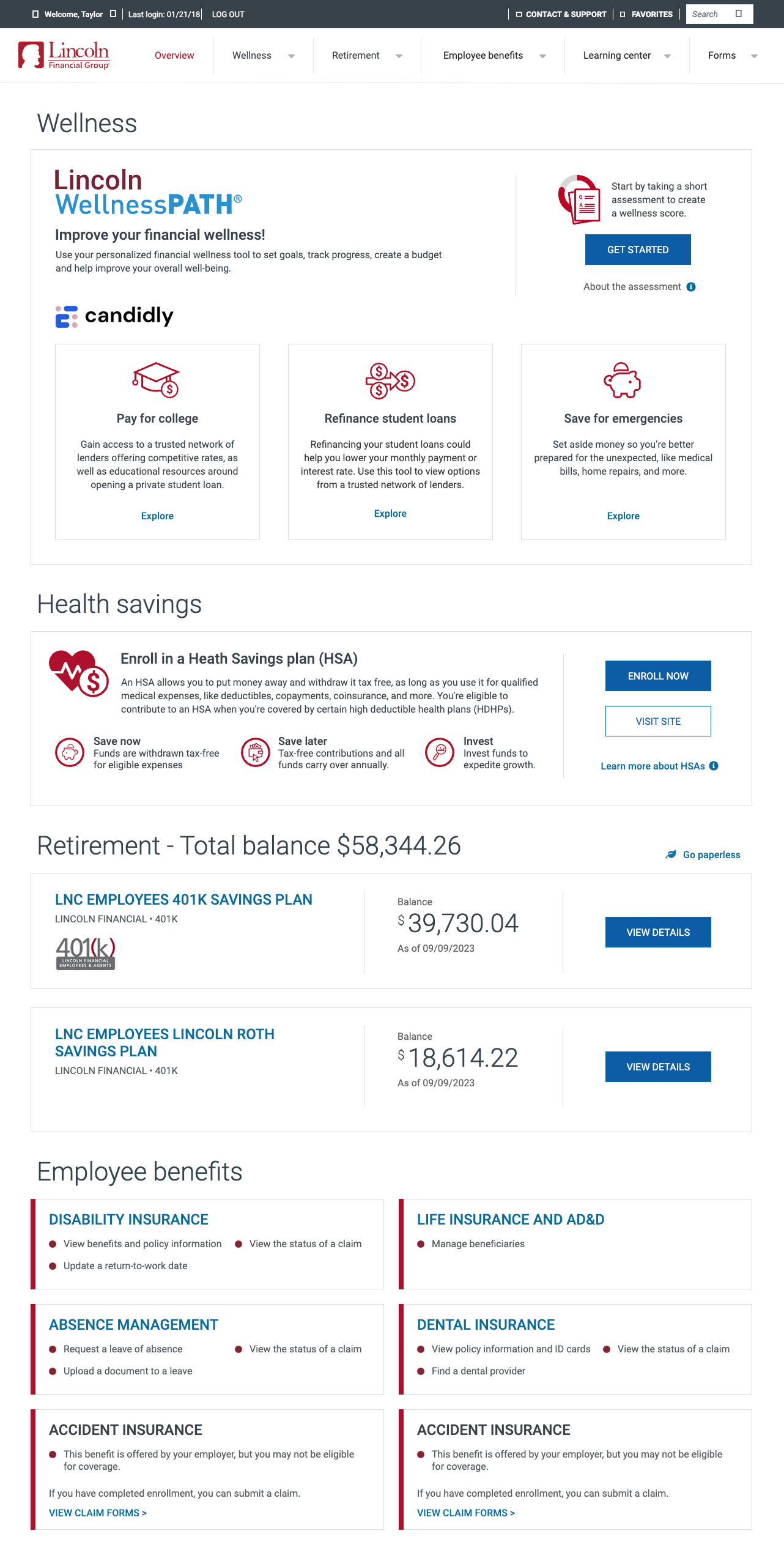
A UX and visual audit of the existing portal surfaced the root causes — issues that went deeper than surface-level styling and required deliberate architectural decisions to resolve.
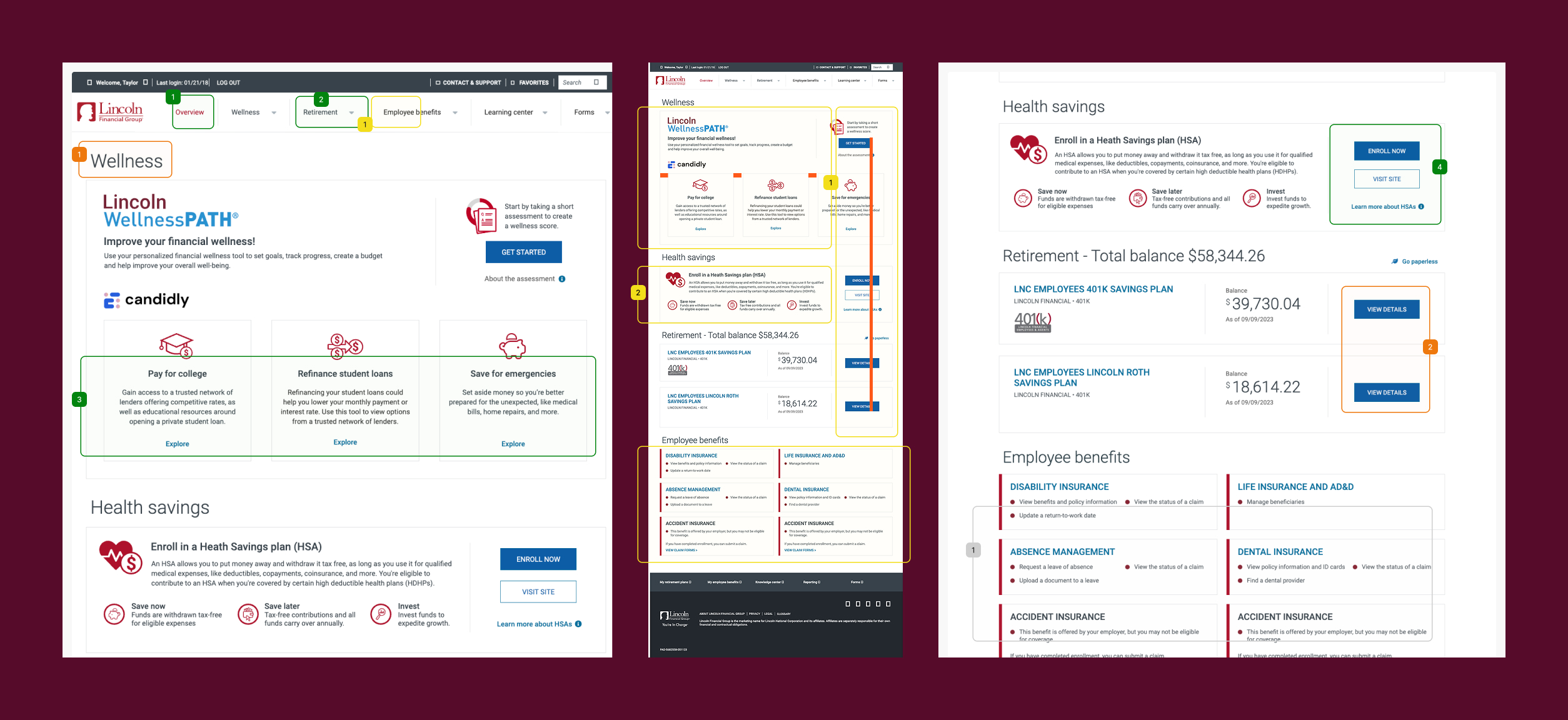
The interface required unnecessary mental effort — an outdated aesthetic compounded by inconsistent typography, spacing, and alignment across the platform.
The portal structure didn't align with how users thought about their financial tasks — forcing excessive scanning and creating unnecessary friction at every stage.
Information was organised around internal logic rather than user priorities — burying high-value actions and making routine tasks harder than they needed to be.
Fragmented visual language across sections — inconsistent colors, button hierarchies, and component behavior — eroded user confidence and made the platform feel unreliable.
Without a unified structure, users lacked a clear path through their tasks — resulting in confusion, over-reliance on customer support, and unnecessary drop-off.
Audit first. Design to the evidence.
Every design decision in this project was anchored to something we observed or tested — not assumed. The process moved in deliberate phases, each informing the next.

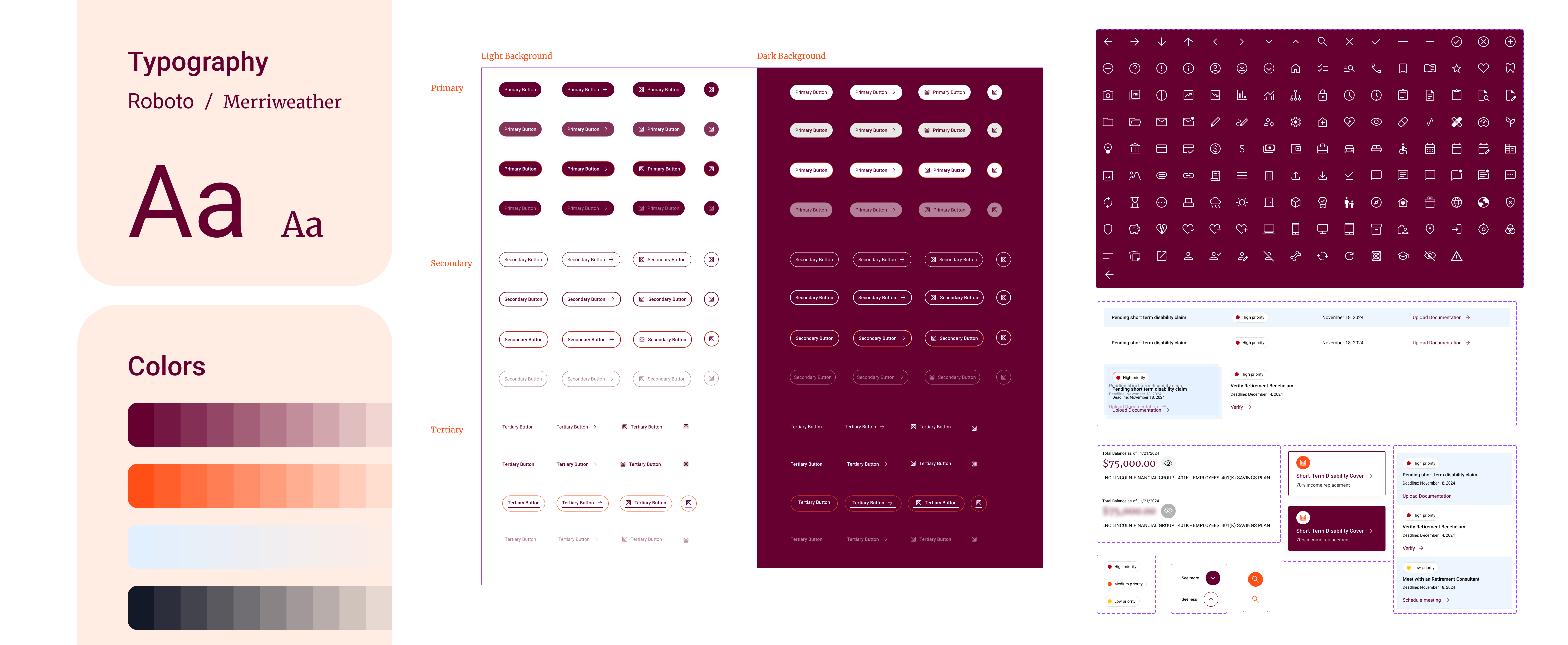
Built a comprehensive component library and style guide in Figma — translating Lincoln Financial's brand guidelines into a fully accessible, scalable digital design system. Enabled consistent application across the portal and significantly reduced development time through reusable, documented components.


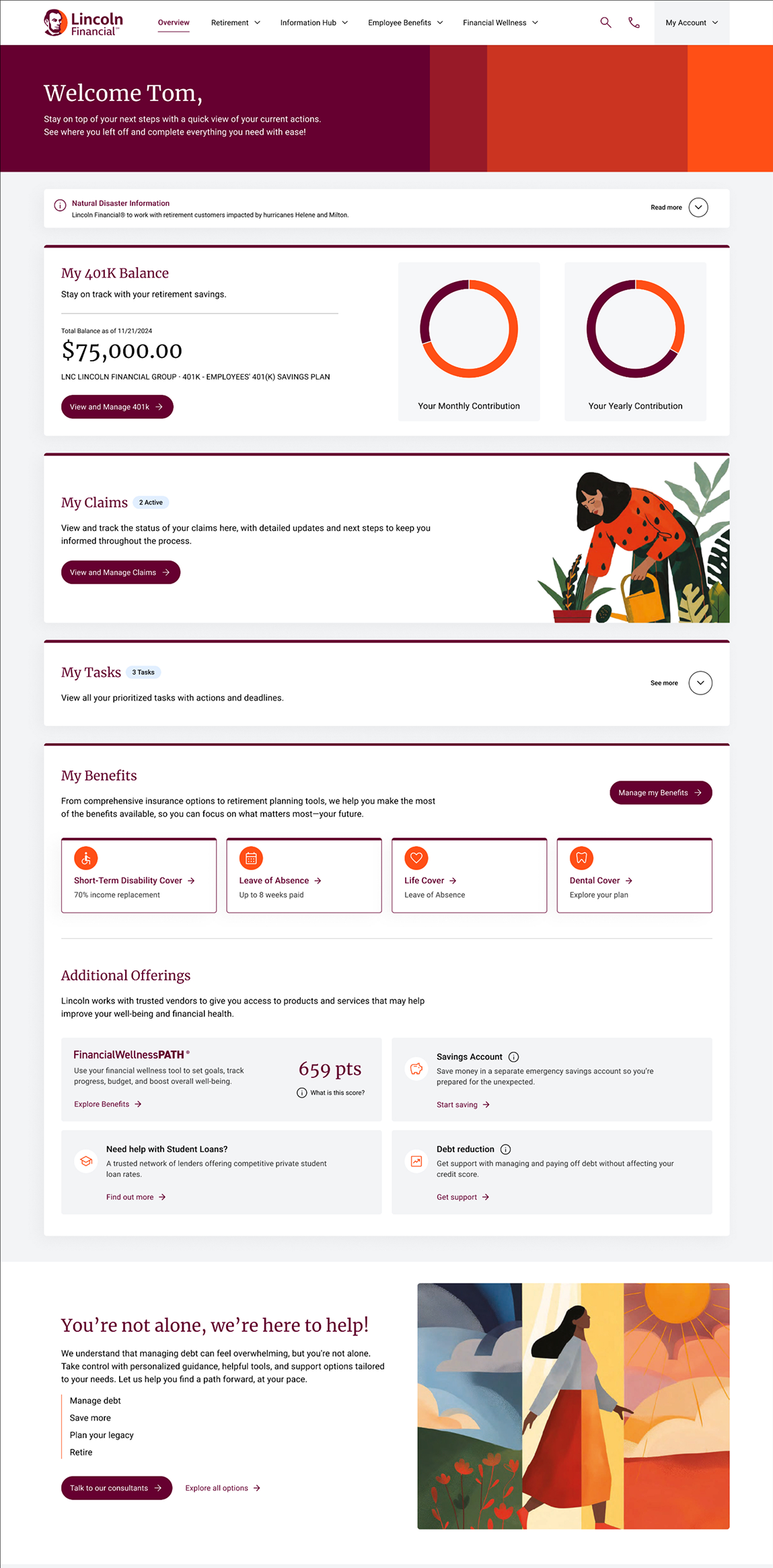
Redesigned the portal navigation with a clear visual hierarchy, consistent labelling, and reduced structural complexity. Users could now locate key information and complete common tasks — managing policies, checking retirement plans, viewing summaries — without unnecessary steps or backtracking.
Redesigned the dashboard to surface only what's relevant to each user — with contextual descriptions, tooltips, and alerts tailored to their profile. Content and CTAs were prioritised by user need, reducing cognitive overload while guiding users toward task completion independently
Prioritised the most common tasks with a streamlined layout that minimises steps to completion. Key actions are immediately accessible, with contextual guidance available without cluttering the primary view.
Users compled key tasks faster following the redesign — driven by clearer navigation and a hierarchy aligned to user priorities.
Improved discoverability and self-service capability reduced the need for users to contact support to complete routine tasks.
Nearly all usability test participants rated the redesigned page design above average for clarity — a strong signal the structural decisions were working.
Participants rated the new UI highly for overall look and feel — confirming the brand application felt both modern and trustworthy.
Calming and relaxing at a time when I could be very stressed out with all this information before.
I like it a lot.... The page is in sync and flows nicely. Very easy to use, I see all actions I want to take right in front of me.

In financial services, clarity isn't just a usability goal — it's an emotional one. When users feel oriented and in control, they trust the product. When they don't, they disengage entirely.
This project sharpened my ability to work within the constraints of an established brand while pushing for genuine usability improvements. Translating brand guidelines into a living design system — rather than a set of static rules — was one of the most valuable outcomes of the engagement, enabling the team to move faster and test more confidently throughout the process.