Translating a major rebrand into a cohesive digital experience

When Physicians Insurance became Actuate Insurance, the new identity needed a digital home worthy of its ambition. I led the end-to-end UX and UI design — rebuilding the site architecture, design system, and user experience from the ground up for a diverse audience of medical professionals across every career stage.
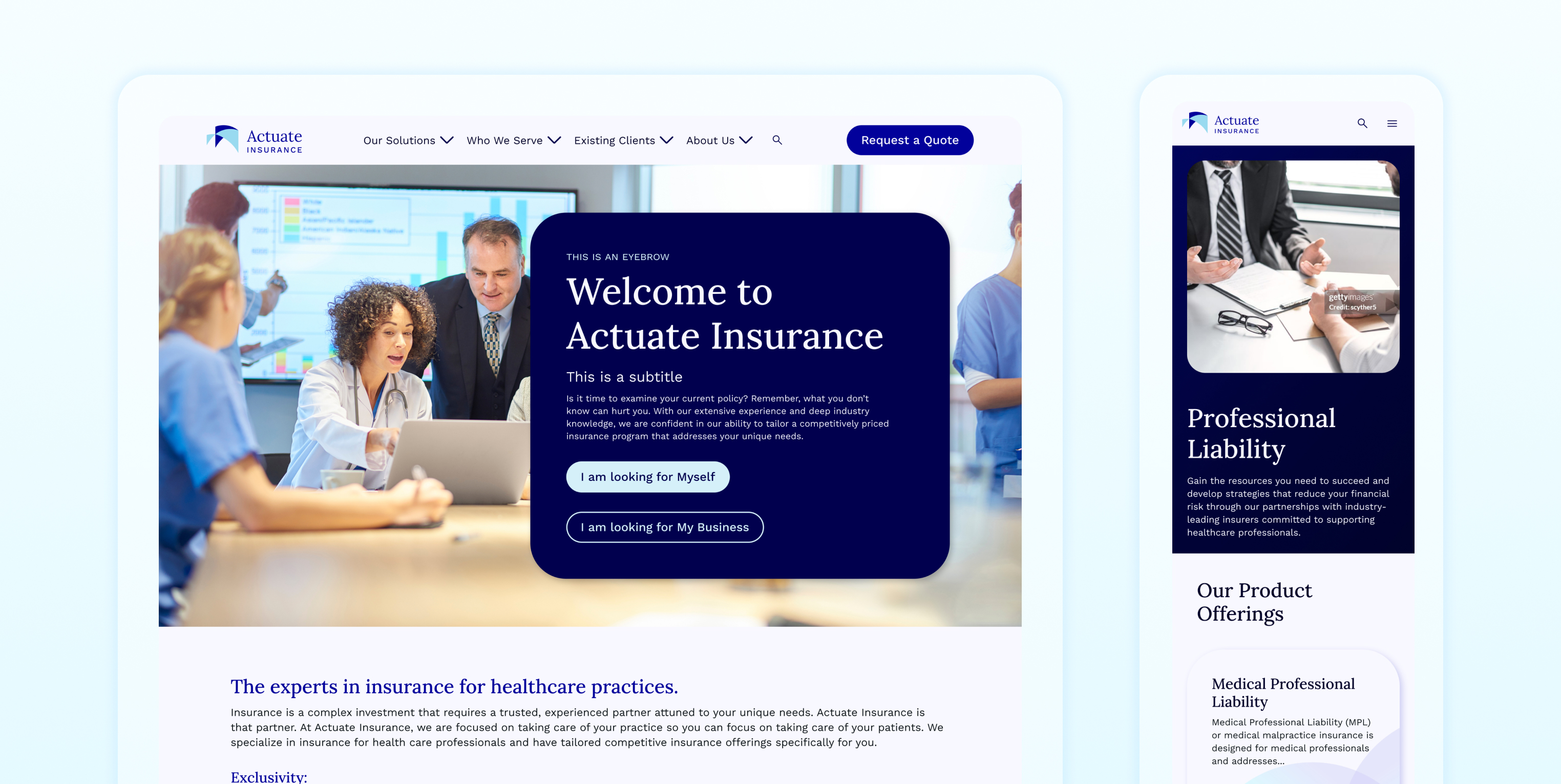
A new name, a new identity — and a website that had to match

Actuate Insurance is a wholly-owned subsidiary of the Massachusetts Medical Society, specialising in data-driven, personalised insurance brokerage services for physicians and healthcare organisations. Formerly operating as Physicians Insurance, the rebrand to Actuate represented a deliberate shift in positioning — from policy provider to strategic partner in protection for the healthcare community.

Their offering spans medical professional liability, cyber liability, employment practices liability, and life and disability cover — serving everyone from medical students exploring their first policy to established practice owners managing complex multi-product relationships. The rebrand was significant. The digital experience had to be too.

Context

The design challenge

Translate a major brand identity overhaul into a cohesive, accessible, and mobile-optimised digital experience — one that could serve a wide user spectrum with clarity, while standing strong against competitors in the increasingly sophisticated healthcare insurance space.

My involvement

I led UX and UI design across the full project lifecycle — from discovery and persona mapping through wireframing, high-fidelity design, usability testing, design system creation, and handover to the client's internal team.
the problem

Four structural failures the rebrand had to fix

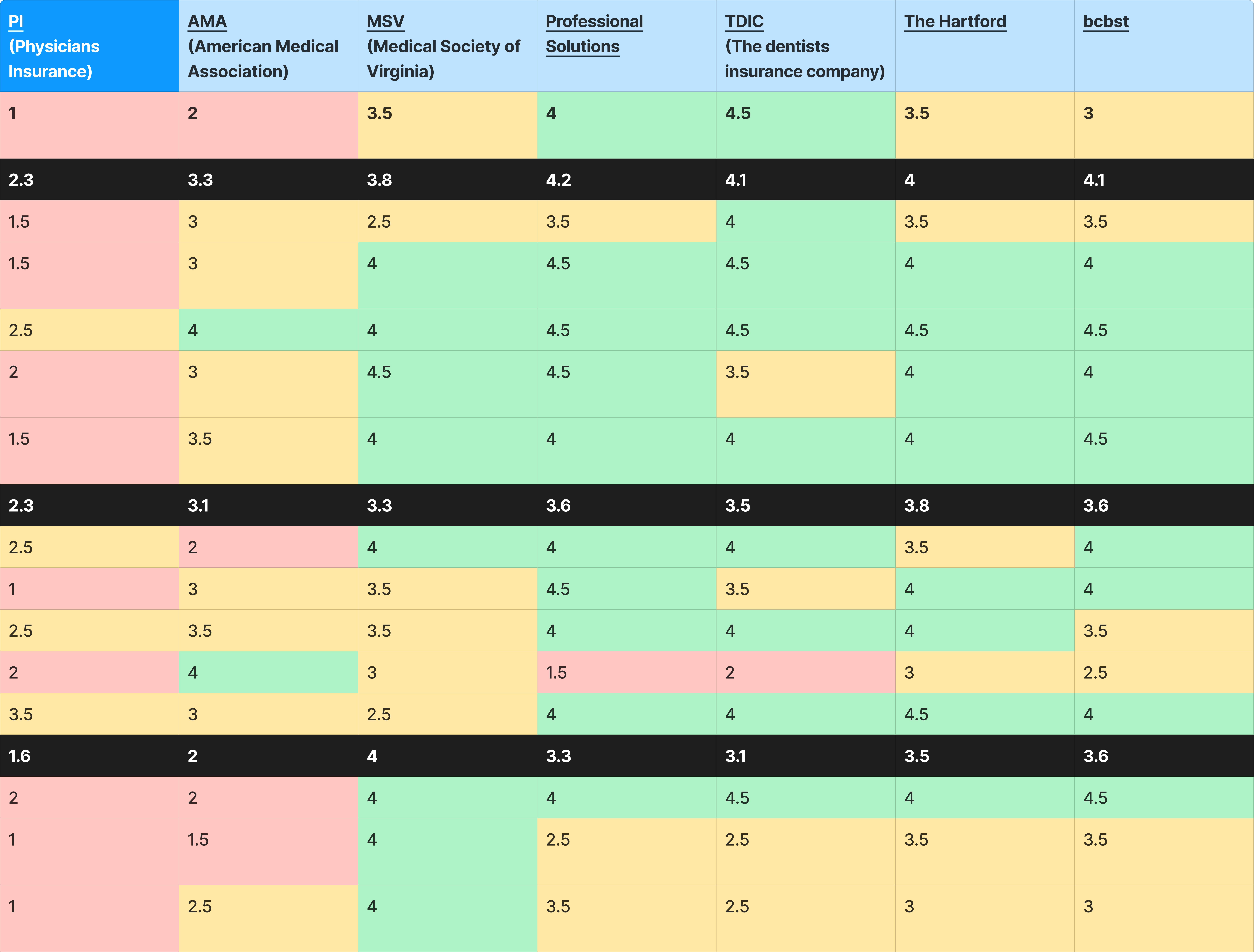
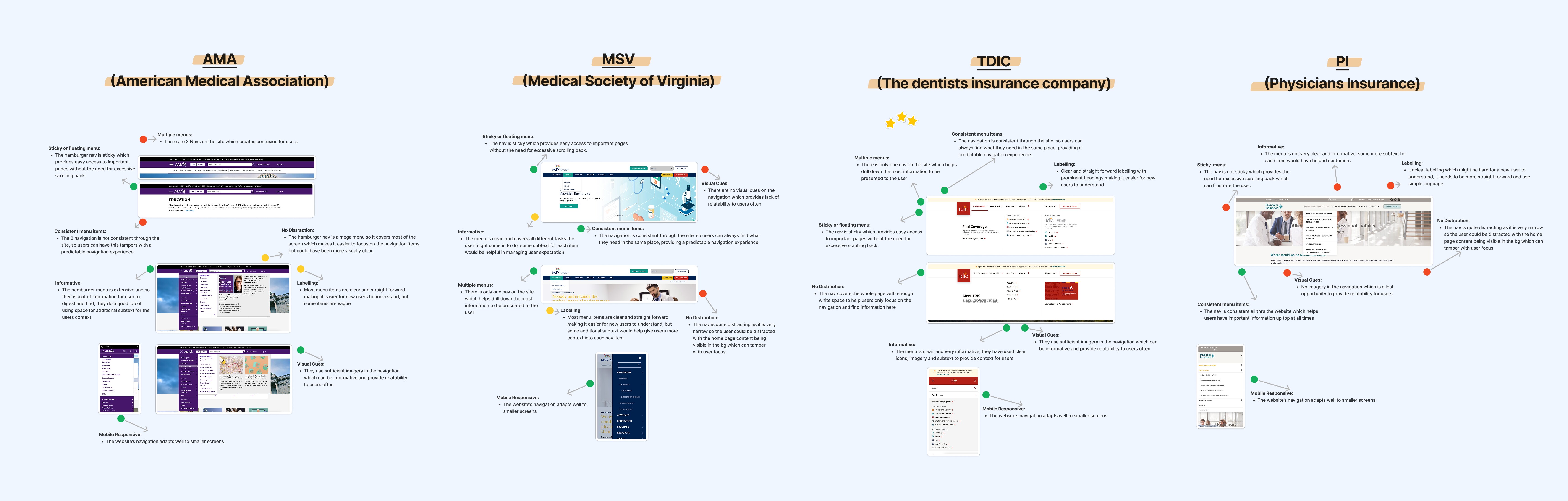
A thorough audit of the existing Physicians Insurance website — combined with stakeholder interviews and competitive analysis — identified four compounding issues that were undermining the digital experience. These became the direct targets of the redesign.

01.

Cluttered UI obscuring content

The site had no shortage of information — but it was poorly organised and visually dense. The result was a UI that overwhelmed users rather than guiding them, making it hard to identify relevant coverage options or take a clear next step.

02.

Navigation that left users lost

Without a clean, intuitive navigation structure, users struggled to locate what they needed quickly — leading to increased frustration, higher bounce rates, and an over-reliance on direct support contact rather than self-service.

03.

No defined brand or visual identity

The existing site lacked a coherent brand identity — with inconsistent messaging, tone, and visual language that created a fragmented experience and failed to communicate what Physicians Insurance (soon to be Actuate) stood for.

04.

Missing search and filtering capability

Users exploring a broad range of complex insurance products had no effective tools to filter or search relevant content — creating unnecessary friction at the discovery and evaluation stage for both new and returning visitors.

THE PROCESS

User-centric from brief to handover.

A rebrand is only as effective as the experience that carries it. My approach was to ground every design decision — from content architecture to component styling — in a clear understanding of who Actuate's users are and what they actually need from a healthcare insurance platform.

01.

Discovery & Research

I immersed myself in the Actuate brand — mapping their mission, audience segments, and position within the healthcare insurance market. Stakeholder interviews aligned the team on business objectives; competitive analysis identified UX and visual gaps across the category. Persona mapping defined the needs of key user groups — from medical students navigating their first coverage decisions to established physicians managing multi-product portfolios. These insights directly shaped both the UX strategy and the content architecture of the new site.
Key insight: The audience spectrum — from medical student to practice owner — meant the site had to communicate complexity simply, without dumbing down for experienced users or overwhelming new ones.
02.


Wireframes & Stakeholder Alignment

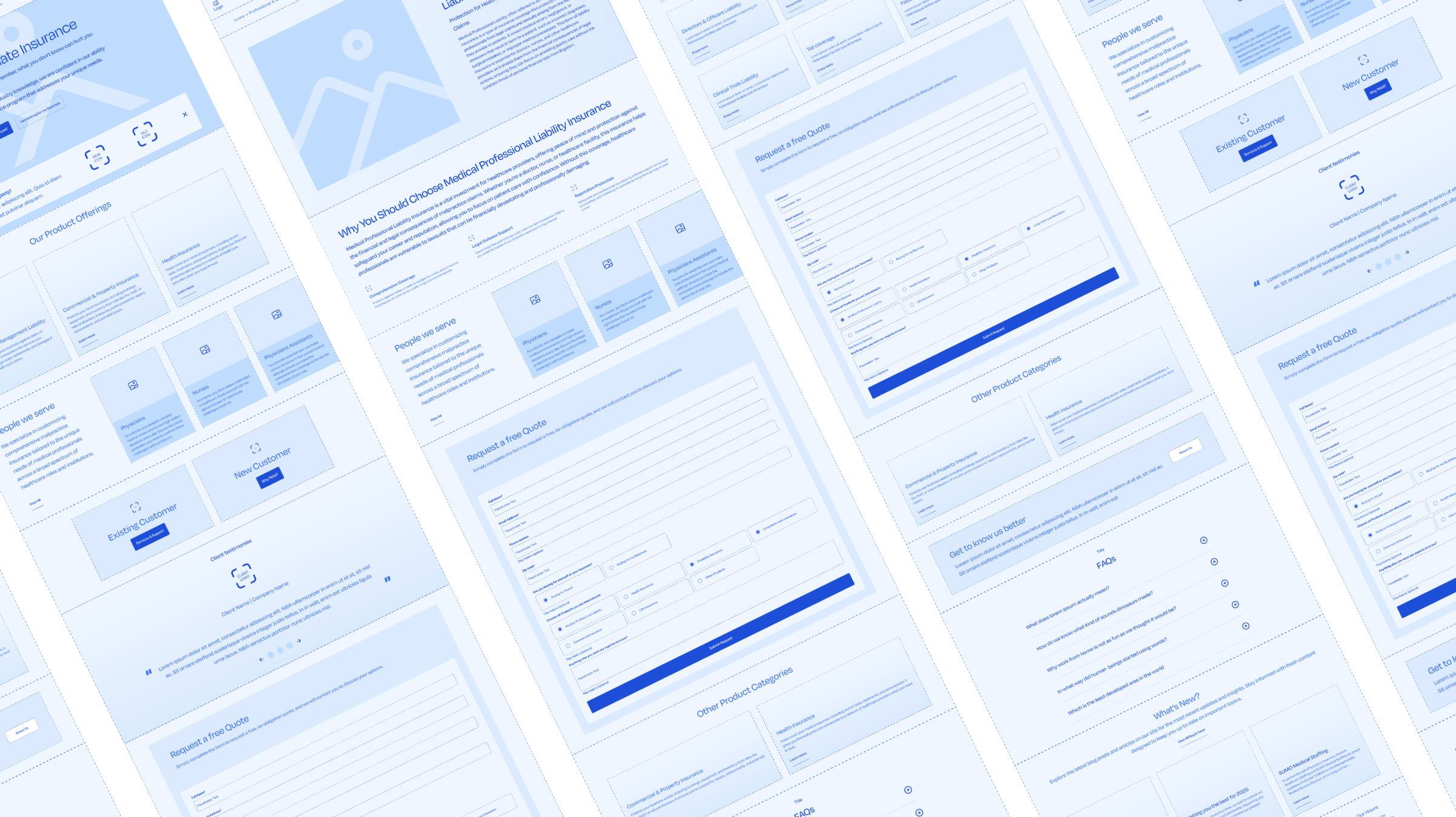
Building on research findings, I developed low-fidelity wireframes that mapped the key user flows and content hierarchy for the new site. Each layout decision was grounded in the goals, navigation patterns, and pain points uncovered during discovery. Wireframes were used as the primary vehicle for stakeholder alignment — ensuring business priorities and user needs were balanced before moving into visual design, and eliminating the risk of costly pivots at the high-fidelity stage.
Method: Low-fidelity first, always. Stakeholder alignment at the wireframe stage is significantly cheaper and faster than revisiting visual design after sign-off.
03.

Design & Development Collaboration


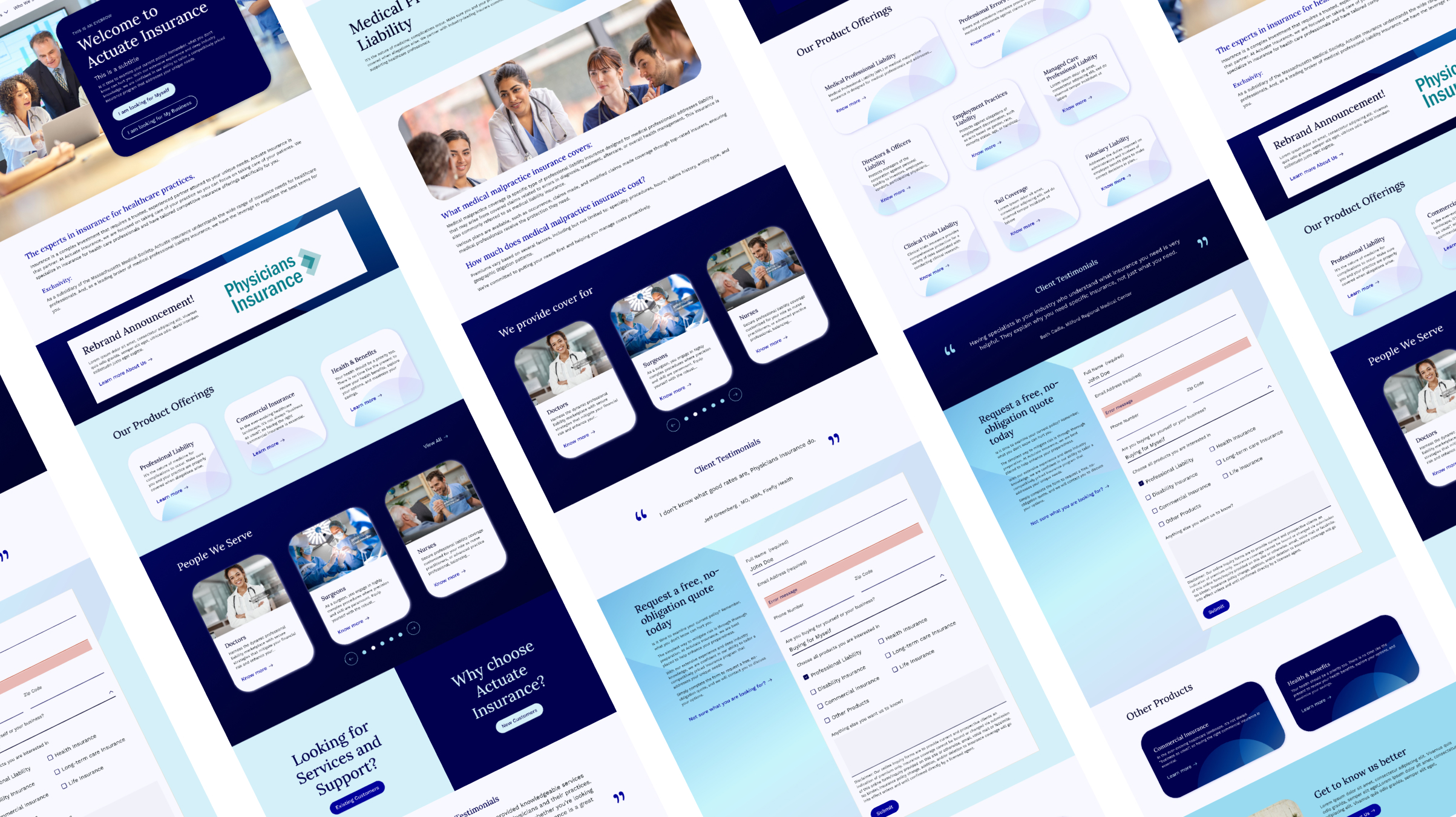
With wireframes validated, I moved into high-fidelity mockups — applying Actuate's new brand identity through a visual language that felt modern, trustworthy, and professional. Responsive design was embedded throughout rather than retrofitted, ensuring a seamless mobile experience from the first screen. I collaborated closely with the engineering team throughout development — maintaining design integrity, guiding back-end customisations, and ensuring accessibility compliance across all components.
Principle: Design and development aren't sequential — they're collaborative. Staying close to engineering during build is where design intent is either preserved or lost.
04.

Usability Testing & Iteration

I conducted usability tests focused on the final UI — asking participants to complete tasks assessing the findability and visibility of key products and services. I observed interactions with visual elements including iconography, button hierarchy, content grouping, and spacing, and gathered open-ended feedback on visual appeal, perceived simplicity, and overall satisfaction. Findings were used to refine the design before handover, ensuring the final product was validated against real user behaviour rather than assumption.
Testing tool: Maze was used for structured usability testing — enabling both task completion data and qualitative feedback to be captured efficiently and analysed alongside stakeholder input.
05.

Design System & Client Handover

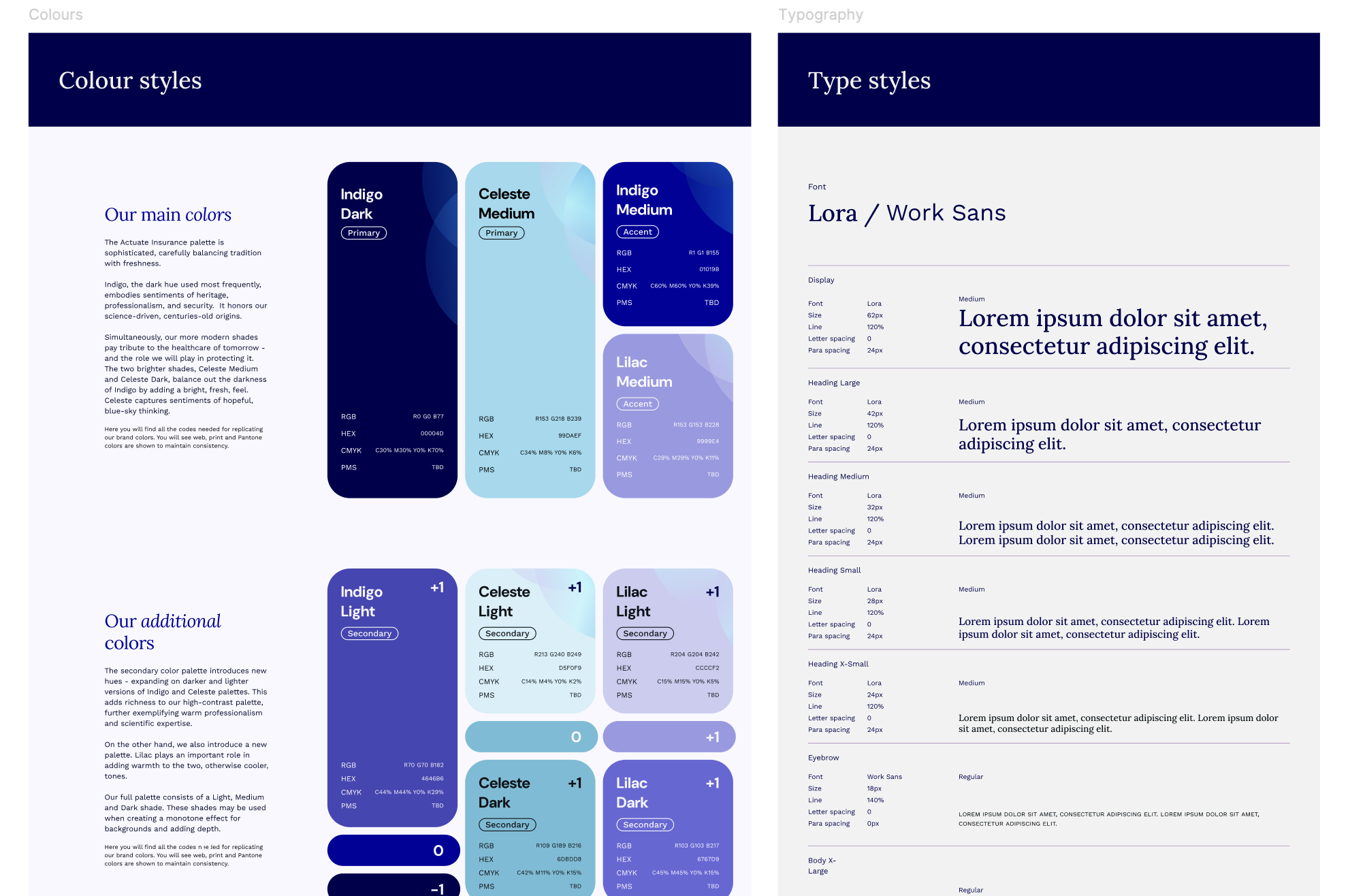
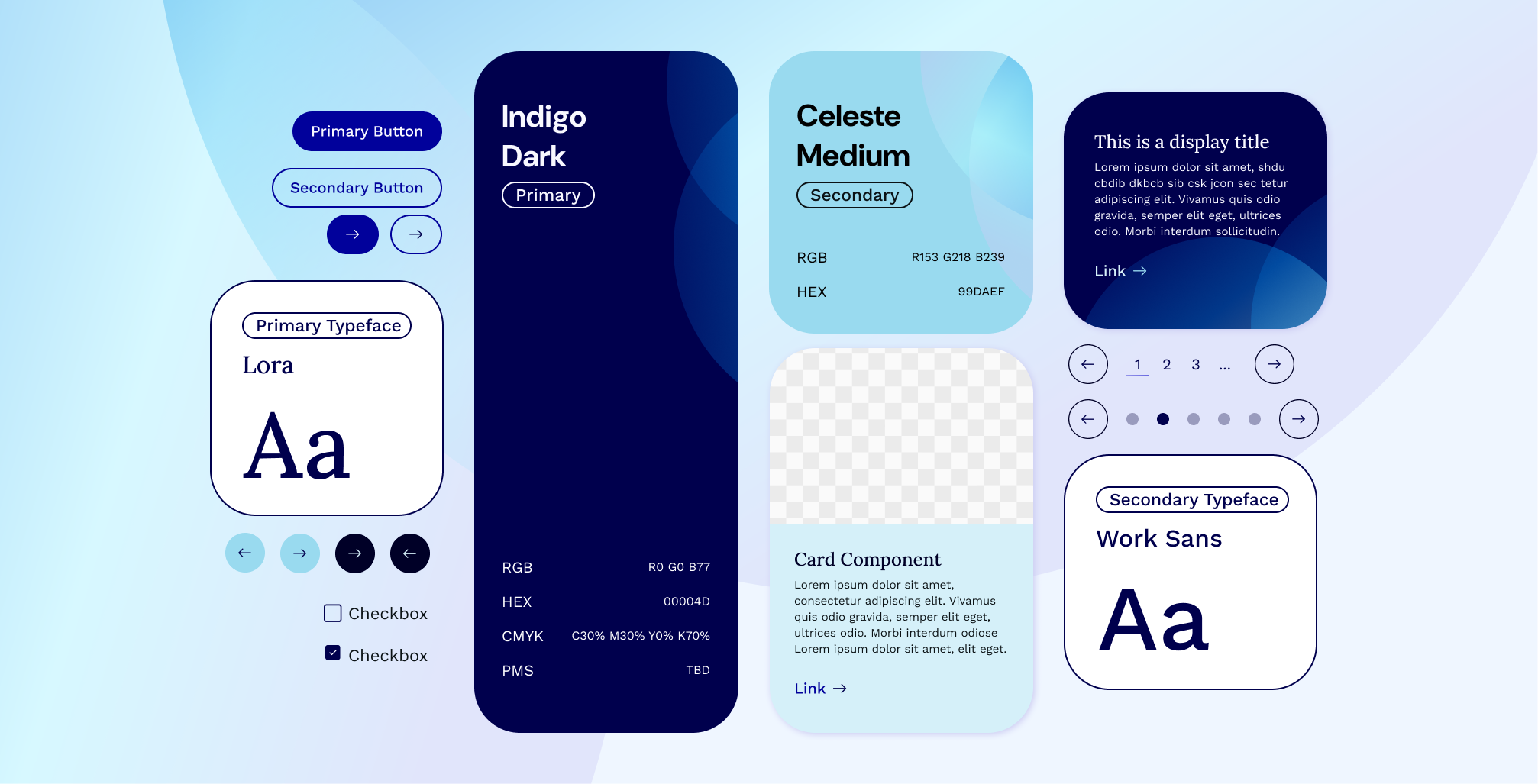
To ensure long-term scalability, I created a comprehensive design system in Figma — covering typography, colour palettes, iconography, and UI components, all documented with usage guidelines. The system was built to give Actuate's internal team full ownership of their digital presence post-launch — enabling them to manage updates, add new content, and evolve the site confidently without requiring constant external design support. Handover included detailed specs, a component library, and structured training sessions.
Outcome: A design system is the longest-lasting deliverable of any web project — it determines whether the design holds up six months after launch, not just on day one.

The Result

Four decisions that brought the rebrand to life digitally

Each solution mapped directly to a failure identified in the audit — ensuring the redesign addressed the underlying structural issues, not just the visual surface.

Rebuilt Navigation Architecture

Redesigned the site navigation with a clean hierarchy, clear labelling, and logical content groupings — ensuring users across all experience levels could find relevant products and information quickly, without needing to scan excessively or rely on support.

Brand Storytelling System

Defined and applied a cohesive visual language and tone of voice throughout the site — translating Actuate's new identity into a digital experience that felt modern, trustworthy, and distinctly theirs. Every page reinforced what the brand stood for and who it served.

Mobile-First Responsive Design

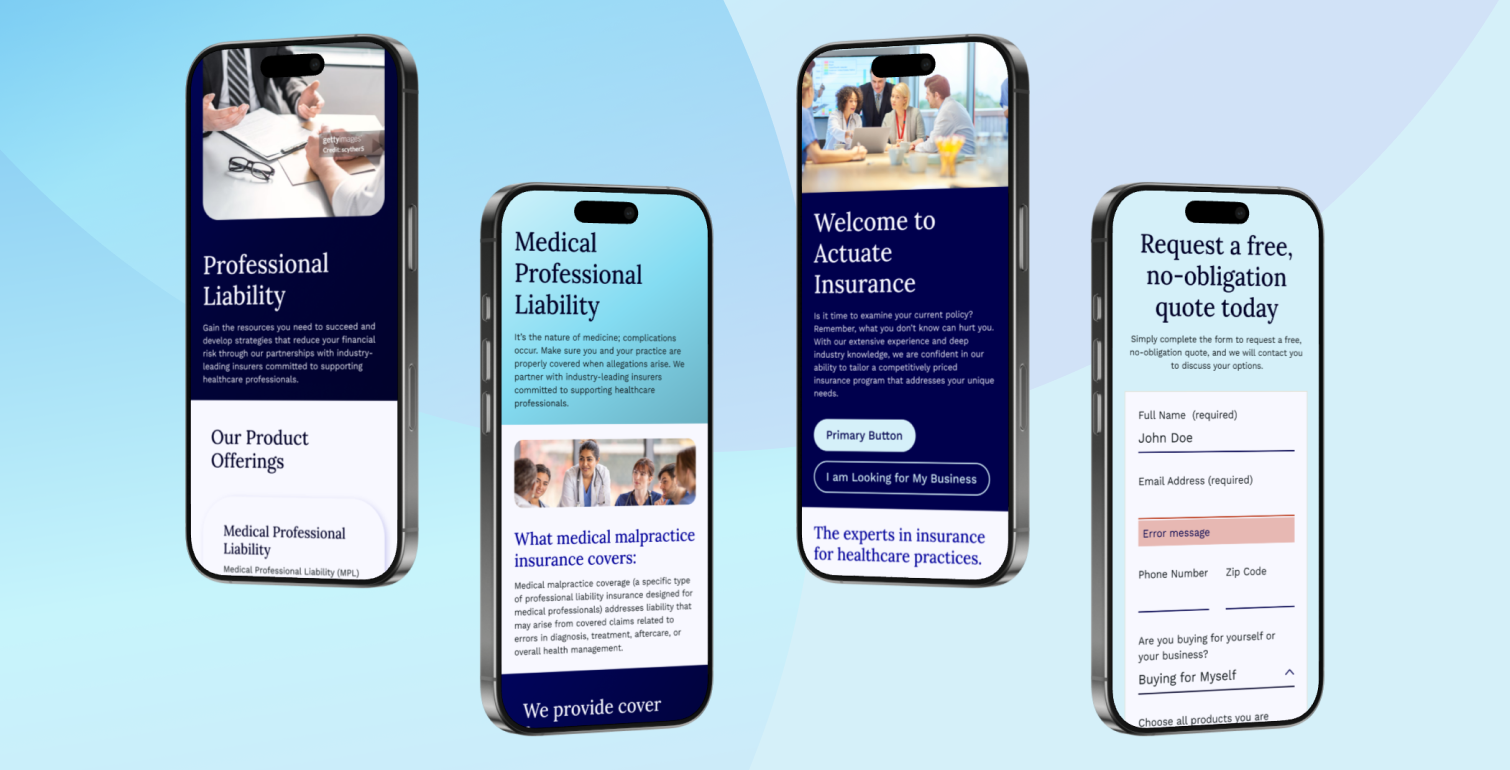
Responsive design was embedded from the ground up — not added after the fact. The site was designed to perform seamlessly across all devices and user contexts, reflecting how healthcare professionals actually access information in practice.

Modular Design System

Built a flexible, documented component library in Figma that gave Actuate's team full ownership post-launch. Modular components allowed the site to scale with new content and offerings without requiring a redesign every time the product evolved.

THE impact

A live product that delivered on every dimension

Rebrand Fully Realised Digitally

The Actuate identity was translated into a cohesive, modern digital experience — consistent in tone, visual language, and user experience from homepage to product detail.

Improved Content Discoverability

The rebuilt navigation and information architecture made it measurably easier for users to locate relevant coverage options — reducing friction at the discovery and evaluation stages of the user journey.

Mobile-Optimised From Day One

A fully responsive, mobile-first experience — designed to perform across all devices and user contexts without compromise, reflecting real healthcare professional usage patterns.

Scalable System Handed Over

A fully documented Figma design system empowered Actuate's internal team to manage, extend, and evolve the site confidently long after the initial launch — protecting the design investment over time.

Reflection

Actuate was a distinctive project because the design challenge was inseparable from the brand challenge. Getting the visual language right wasn't about aesthetics — it was about making a renamed company feel credible and trustworthy to users who had known it under a different name. Every colour choice, typographic decision, and layout pattern was carrying brand meaning, not just functional meaning.

Working across such a wide user spectrum — from medical students to seasoned practice owners — also sharpened my instincts around progressive disclosure and information hierarchy. The same content had to land clearly for a first-time visitor and efficiently for a returning power user. That tension is never fully resolved; it's managed, page by page, through deliberate prioritisation of what appears first and what's a single interaction away.